Riding season
How to inspect a motorcycle before buying: a used bike checklist
What to check before buying a used motorcycle: paperwork, engine, crash damage and wear items. An inspection checklist and questions to ask the seller.
The photos show a clean motorcycle. The listing says “ready to ride”. In person, it might need tyres, a chain and fork repairs — and it’s unclear who can actually complete the sale.
Start a used motorcycle inspection with the paperwork and history, then move on to its mechanical condition. Here’s a sequence to help you rule out questionable listings and work out what to show a mechanic before buying.
A quick checklist before buying
Save this list on your phone:
- The seller can explain their authority to sell the motorcycle.
- The identification number on the frame matches the paperwork.
- There’s a clear servicing and repair history.
- You can see the engine start from cold.
- There’s no unexplained damage to the frame, forks or wheels.
- You’ve checked the tyres, brakes, final drive and electrics.
- You know what work will be needed after buying.
- You’ve agreed on an independent inspection and proper sale paperwork.
Working through a checklist helps you spot problems, but it doesn’t replace a professional inspection.
1. What to ask the seller before meeting
Don’t spend half a day travelling only to hear: “A friend has the documents; we can’t transfer ownership right now.”
Before setting off, ask:
- Who owns the motorcycle, and who will handle the sale?
- How long has the seller had it?
- Has it been dropped, crashed or repaired afterwards?
- When was its last service, and at what mileage?
- What needs replacing now?
- Are there service records, receipts and spare keys?
- Will the seller agree to an inspection at an independent motorcycle workshop?
Ask for recent photos of both sides, the engine, forks, wheels and any damage. Keep the answers: it’ll be easier to compare them with the bike’s actual condition when you see it.
Arrange to view the motorcycle in daylight and ask the seller not to warm up the engine before you arrive. A cold start can reveal problems that are less noticeable with a warm engine. RevZilla’s used motorcycle buying tips
2. Check the paperwork and frame number before the mechanical inspection
Match the motorcycle’s identification number to its registration documents. Check the standard location for that particular model: identification numbers don’t all have the same format or position.
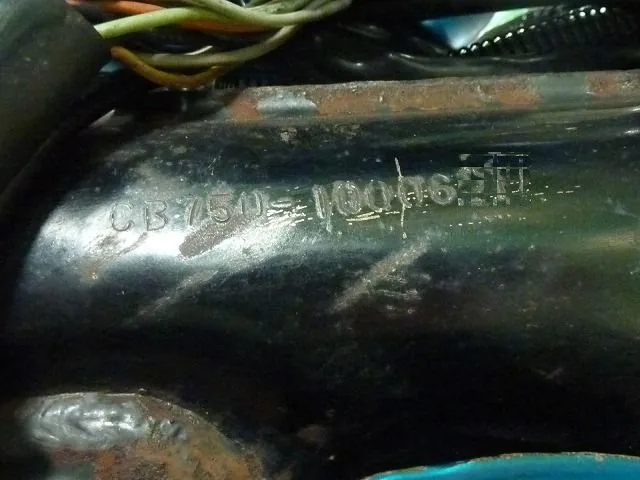
Example of a frame marking. Its location and format depend on the model; a photograph alone cannot establish authenticity.
Look for grinding, welding or other alterations around the number. Don’t try to establish whether the marking is genuine yourself — an expert should investigate any doubts.
For a motorcycle already registered in Ukraine, establish who owns it and what authority the seller has if they’re someone else. For an imported bike that hasn’t been registered yet, separately check the documents needed for its first registration.
An expert identification examination and a mechanical inspection are different procedures. Experts check the authenticity of identification numbers and documents; a mechanic checks the bike’s condition. According to Ukraine’s Ministry of Internal Affairs, the expert examination is mandatory for the first registration of a used vehicle imported from abroad, but optional for a routine transfer between owners. Ministry of Internal Affairs guidance
Before the sale, check the current document requirements for your situation on the Main Service Centre of the Ministry of Internal Affairs website. These registration details apply to Ukraine.
3. Look for signs of drops and repairs
Start with parts that often touch the ground: bar ends, levers, mirrors, footpegs, engine covers and the exhaust.
One scratch doesn’t tell the whole story. What matters more is whether the damage fits together and matches what the seller told you.
For example, a scraped engine cover, replacement lever and damaged footpeg on the same side are reasons to ask more about a drop. New parts alone don’t prove a crash: they might have been fitted for comfort or appearance.
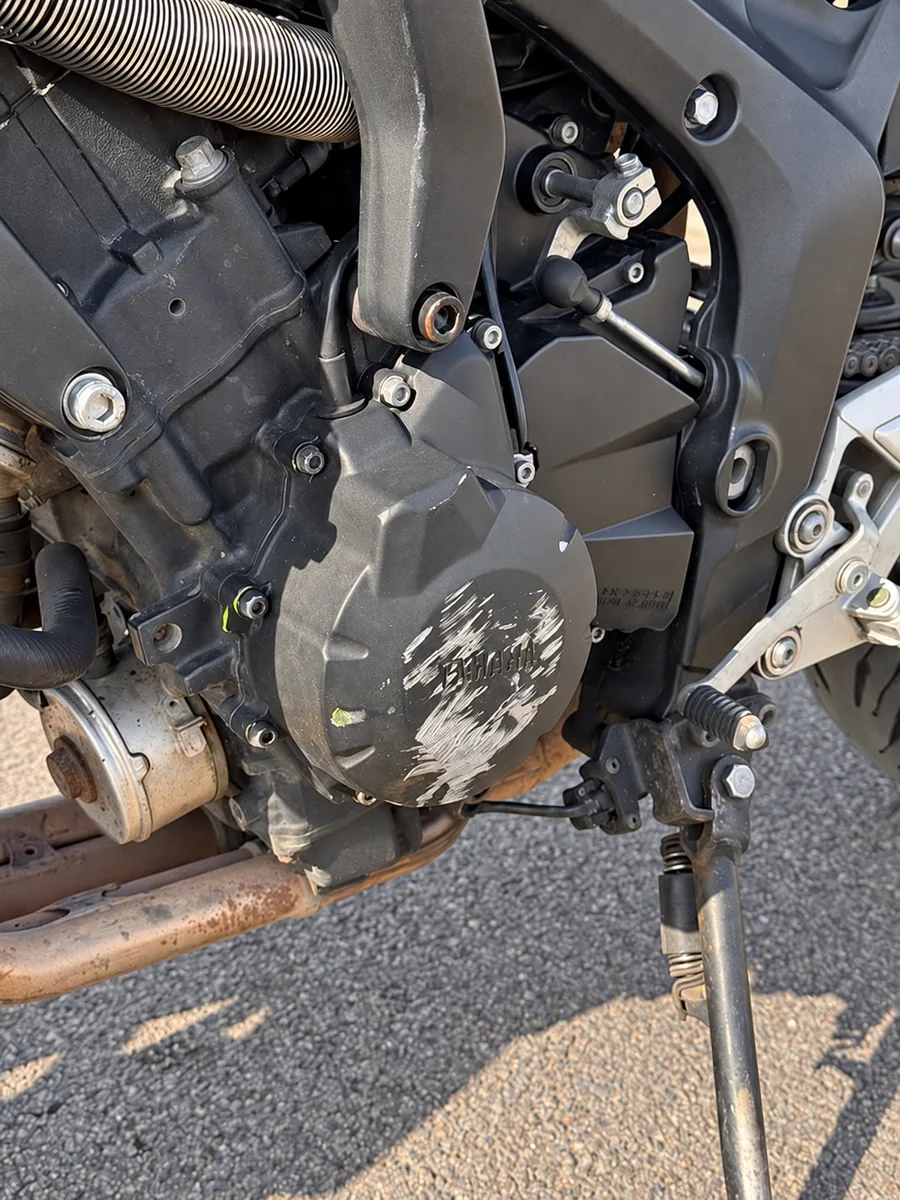
Scratches on the engine cover are a reason to ask about a drop and inspect other parts on the same side.
Pay particular attention to:
- cracks and signs of frame repairs;
- damaged steering stops;
- suspicious welds;
- visible misalignment;
- bent fork components.
Cosmetic defects can be assessed and discussed. Suspected frame damage or alignment problems need a professional inspection. Inspection points in the Bennetts guide
4. Check the running gear, brakes and final drive
These parts affect both safety and how much you’ll need to spend after buying.
| Part | What to look for |
|---|---|
| Tyres | Cracks, bulges, damage and uneven wear |
| Wheel rims | Dents and cracks |
| Brakes | Pad, disc and hose condition; leaks |
| Forks | Oil leaks and corrosion on sliding surfaces |
| Chain and sprockets | Rust, uneven tension and worn teeth |
| Controls | Damaged levers, a sticking throttle and damaged cables |
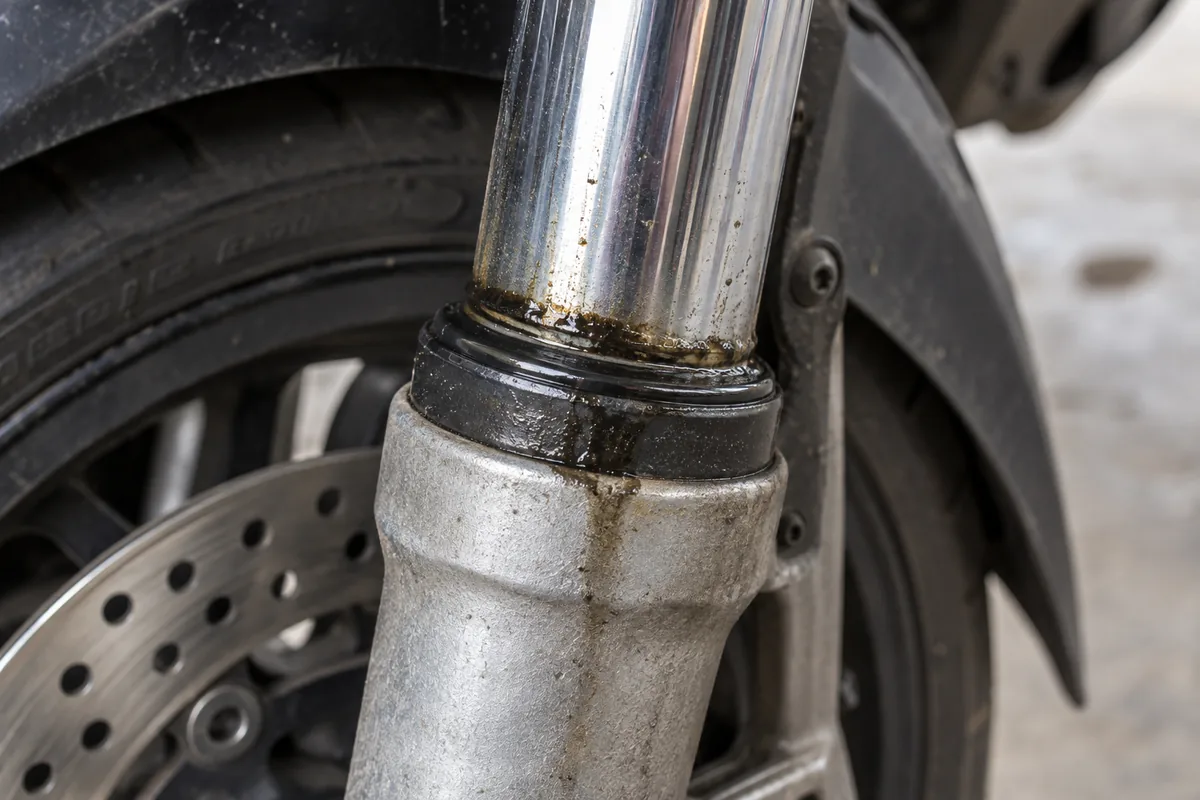
Show oil traces on the fork to a mechanic: establish the cause of the leak and the repairs needed before buying.
Disc thickness limits, chain tension and other specifications must be checked against the documentation for the particular model. Bearing play and suspension condition are best assessed with a mechanic and the right equipment. Motorcycle Safety Foundation checklist
5. Watch a cold start and check the electrics
Ask the seller to start the engine in front of you. Notice whether it starts easily, stalls, makes a pronounced knocking sound, produces persistent smoke or leaks fluids.
Don’t diagnose an engine from one sound. A single-cylinder engine, an inline-four and a two-stroke sound different. An unfamiliar noise is a reason for an inspection, not a diagnosis by itself.
Check the headlights, indicators, horn, instrument panel and brake light using both brakes. Compare warning-light behaviour, including ABS, with the model’s manual: some lights only go out after the bike starts moving. Checking a used bike’s engine and electrics
6. Don’t judge a motorcycle by mileage alone
A low number on the dashboard doesn’t guarantee good condition. Compare it with the service history, component wear and how the bike has been used.
Ask about long periods off the road, repairs, track use and off-road riding. For an enduro bike, clarify whether engine hours are recorded, where applicable, and which maintenance schedule applies.
Receipts and records are useful when it’s clear which motorcycle they belong to and what work was done. “I always serviced it on time” isn’t enough on its own. Why condition and history matter alongside mileage
7. Work out the costs after buying
Don’t just compare asking prices. Calculate what it will cost to bring each bike into the condition you need.
List these separately:
- the motorcycle’s price;
- inspection and registration costs;
- confirmed repairs and parts;
- delivery, if needed;
- costs you haven’t been able to estimate yet.
If the service history is unknown, agree on an initial service with a workshop using the model’s maintenance schedule. Don’t assume the same allowance for every bike: tyre, final-drive and labour costs vary.
When to pause the purchase
Put the purchase on hold if:
- the frame number doesn’t match the documents;
- the seller can’t explain their authority to sell;
- you suspect frame repairs or alignment problems;
- the seller refuses an independent inspection without a clear reason;
- you’re being rushed into paying a deposit before checking the bike;
- its condition clearly contradicts the listing.
Not every fault means walking away. Worn consumables can be reflected in the price. An unexplained knock or an unclear frame history is a risk whose cost is still unknown.
The first viewing should help you decide whether the motorcycle is worth investigating further. If it looks suitable, the next step is an independent inspection and proper sale paperwork.
Browse the BRAP motorcycle marketplace. Use the same checklist for every bike: a published listing doesn’t confirm its mechanical condition.